

The majestic great sanctuary that stands beyond the deep forests of Mt. Daisen
A National Important Cultural Property Preserving the Legacy of Shinbutsu‑Shūgō
Since ancient times, Mt. Daisen has been revered as the sacred mountain where Ōnamuchi‑no‑Mikoto resides,
and was known as “Ōgamidake” or
Since ancient times, Mt. Daisen has been revered as the sacred mountain where Ōnamuchi‑no‑Mikoto resides,
and was known as “Ōgamidake” or “Ōgamiyama.” This place served as a sacred site for the worship of the deity.
From the Nara period onward, Shugendō practices—and later Buddhism—were introduced to the mountain,
and under the doctrine of Shinto‑Buddhist syncretism, the great deity of Daisen came to be revered as
Revered under the name Daichimyō‑Gongen, the deity was served jointly by Shinto priests and temple monks,
and by the Heian period this form of worship had flourished greatly in the region.
Centered around the Okumiya, the mountain developed into the greatest sacred site in western Japan,
with three temple complexes, one hundred eighty sub‑temples, and as many as three thousand warrior monks.
Thereafter, the mountain’s religious institutions rose and declined with the changing times,
but in 1875 (Meiji 8), with the government’s decree separating Shinto and Buddhism,
it became the Ōgamiyama Shrine Okumiya and returned to its original form as a purely Shinto shrine.
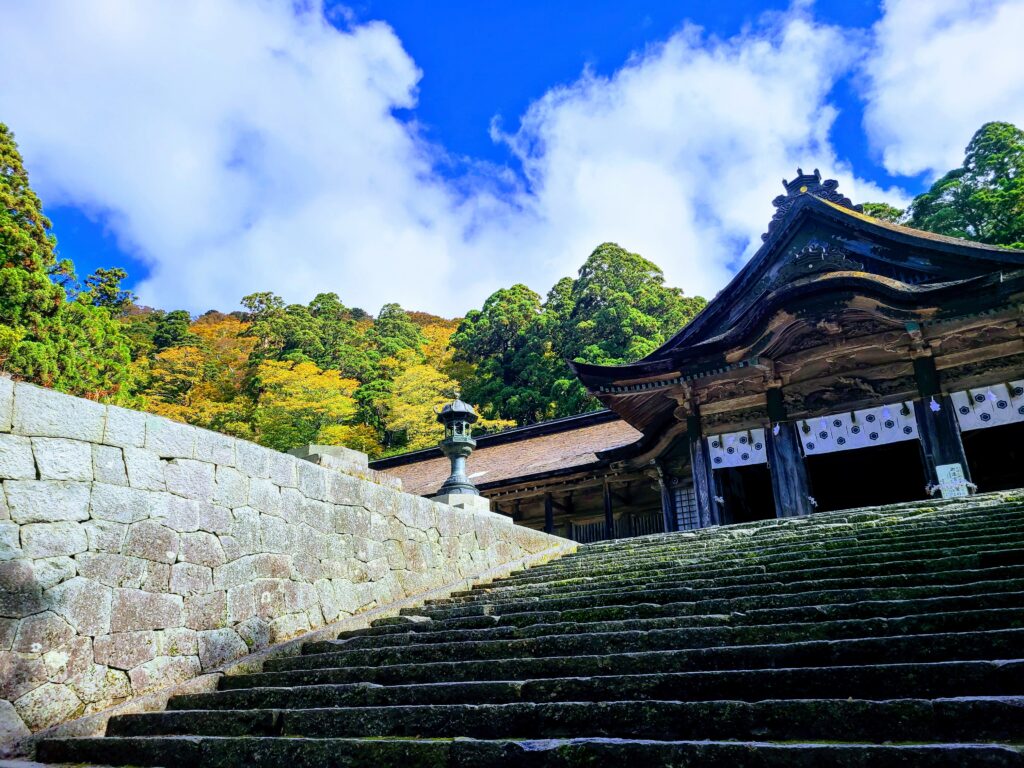
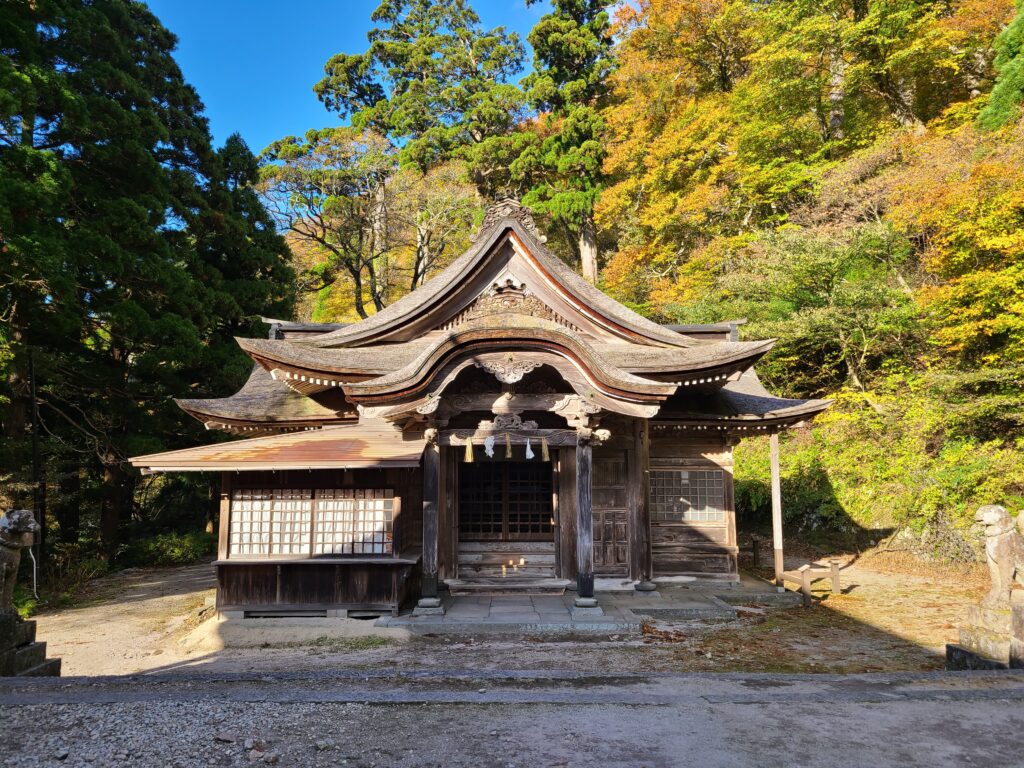
The present shrine building, designated as an Important Cultural Property,
was constructed in 1805 (Bunka 2) and
one of the largest examples of Gongen‑zukuri architecture in Japan
The long front corridor extends outward on both sides for approximately fifty meters.
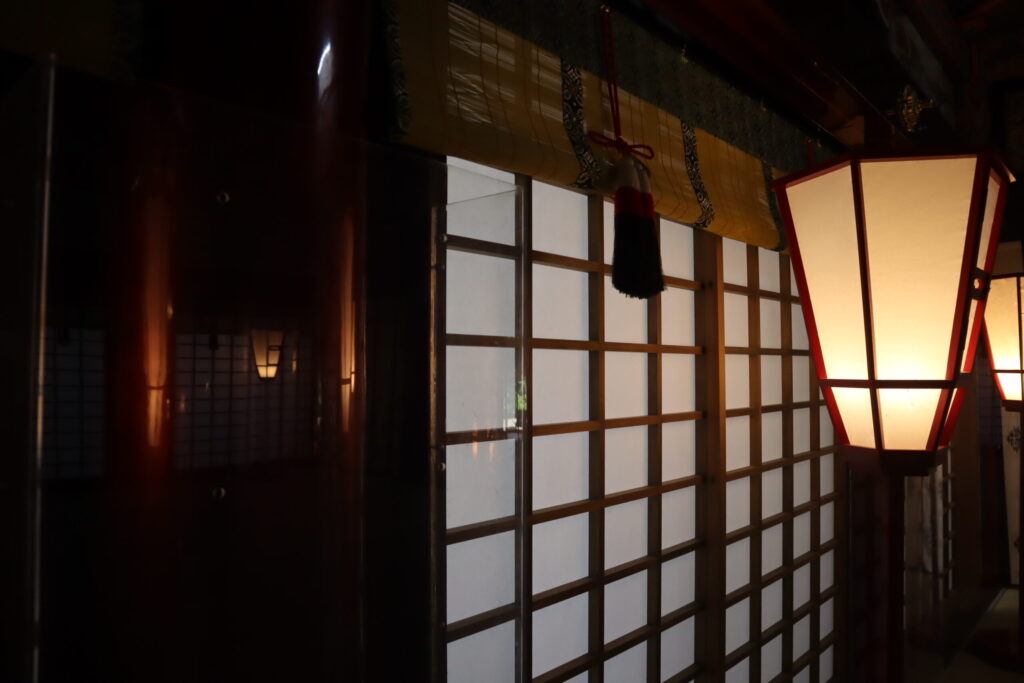
Inside, the richly colored interior features long, imposing pillars and beams finished in exquisite sandalwood lacquer,
considered the finest of its kind in Japan.
considered the finest of its kind in Japan.
In 1988 (Shōwa 63), it was designated as a National Important Cultural Property and
and has been carefully preserved to the present day.
In addition, the name plaque on the front of the shrine was inscribed by Sanjō Sanetomi,
who served as the President of the Meiji Restoration government.
and was written by Prince Arisugawa Taruhito.
The Approach to the Okumiya
We would like to inform you about the current condition of the approach to the Okumiya.
we would like to inform you.
Please click here.now
The Four Seasons of Mount Daisen
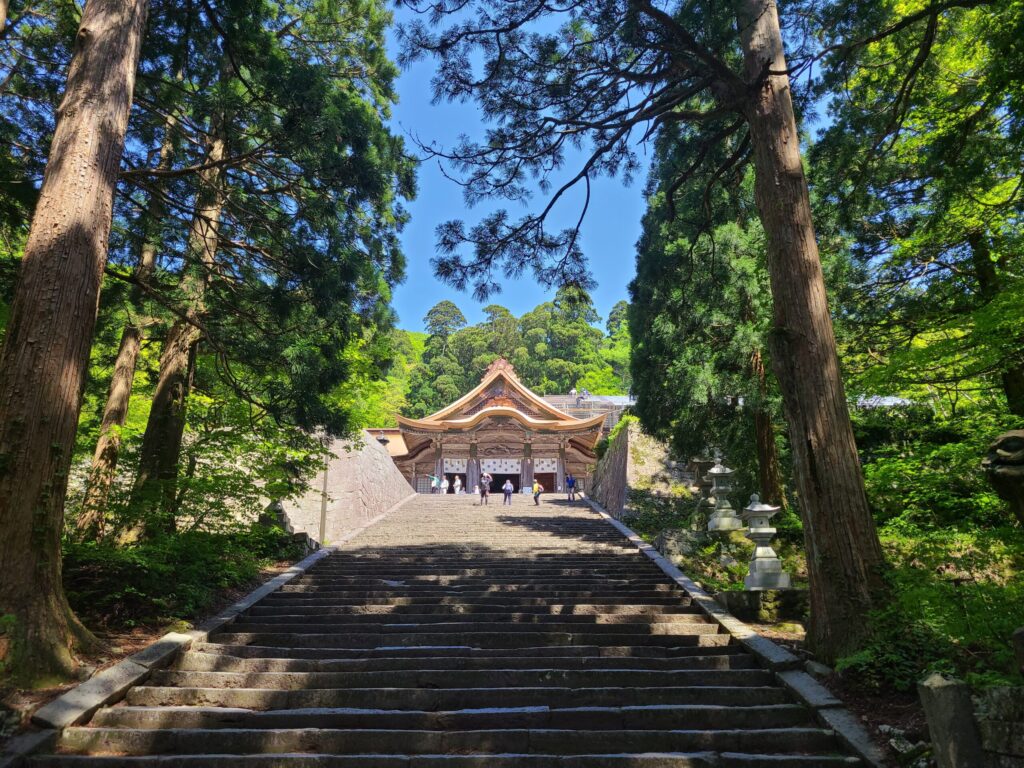
Spring
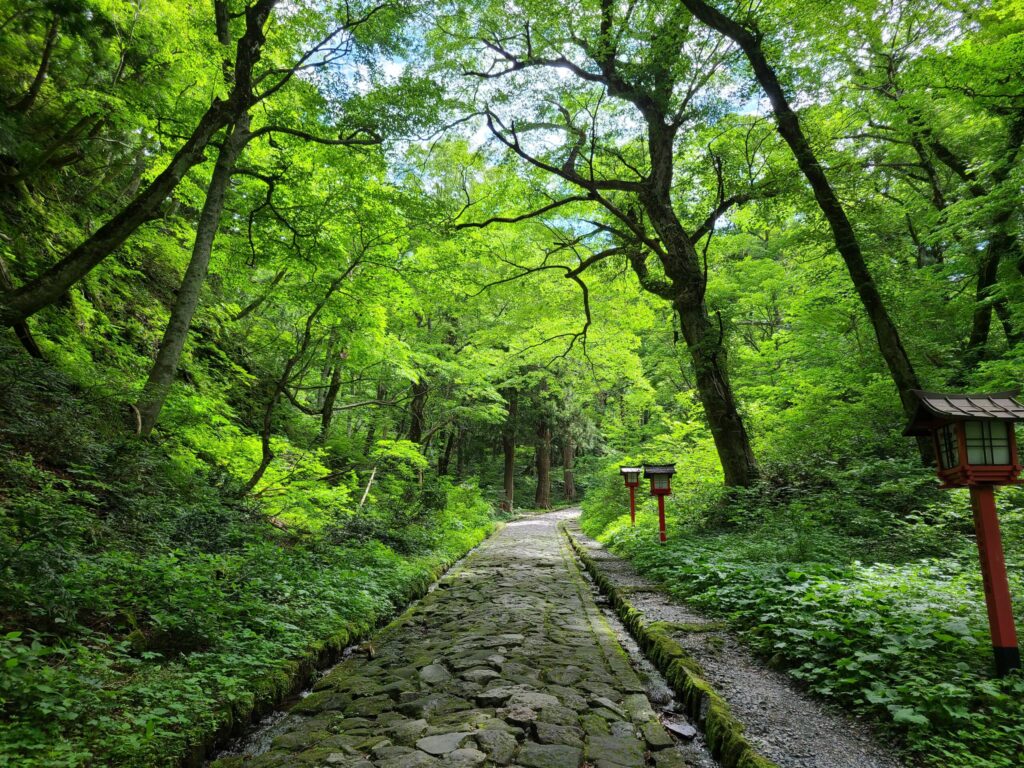
Summer
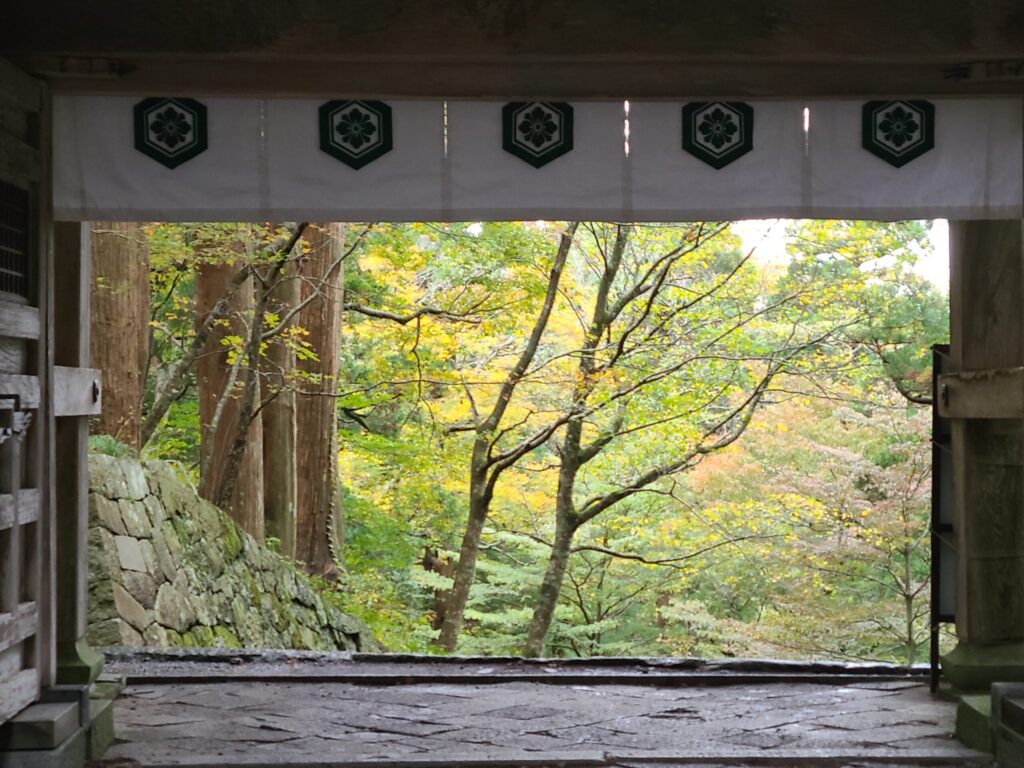
Autumn
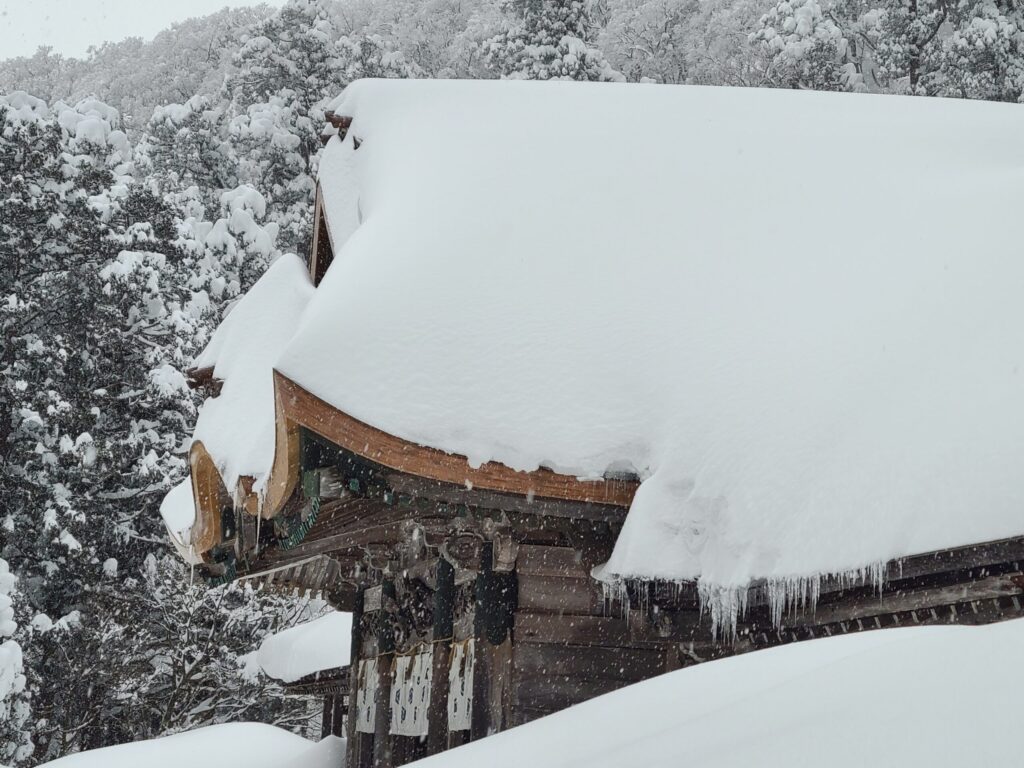
Winter
The Okumiya Main Shrine Building
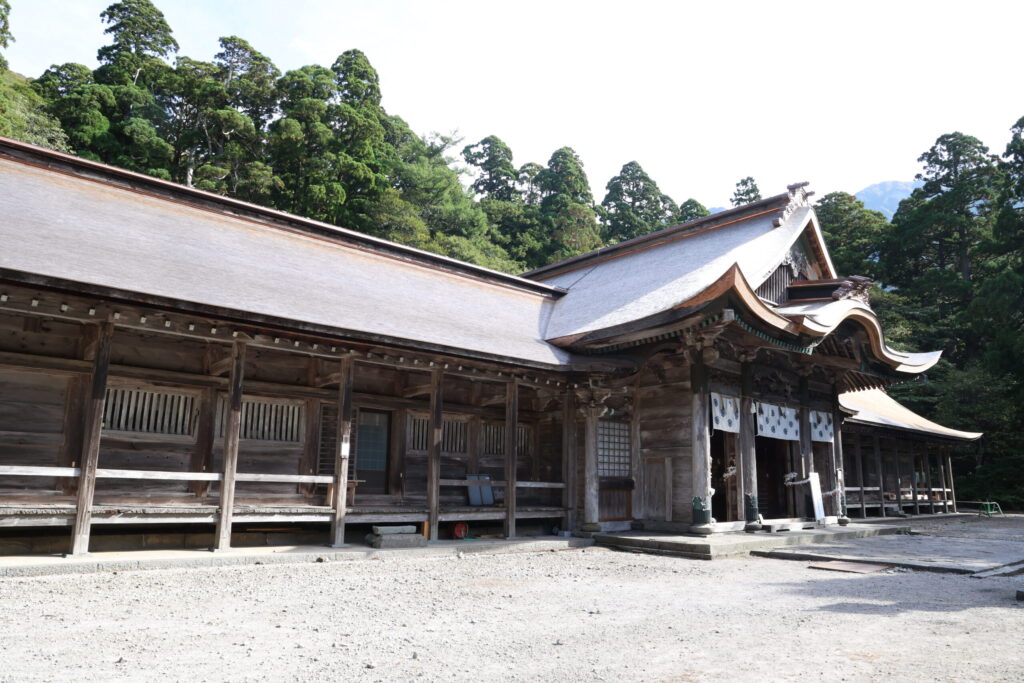
The Gongen‑zukuri shrine building, regarded as one of the largest of its kind in Japan, extends approximately fifty meters on each side.
It features an exceptionally rare architectural style in which the main sanctuary, offering hall, worship hall, and connecting corridors form a single unified structure.
How such a massive shrine could have been constructed in this harsh mountain terrain,
in an age without vehicles or heavy machinery, remains a mystery to this day.
It is an outstanding example of late‑Edo period shrine architecture that reflects the deep devotion associated with the worship of Mount Daisen.
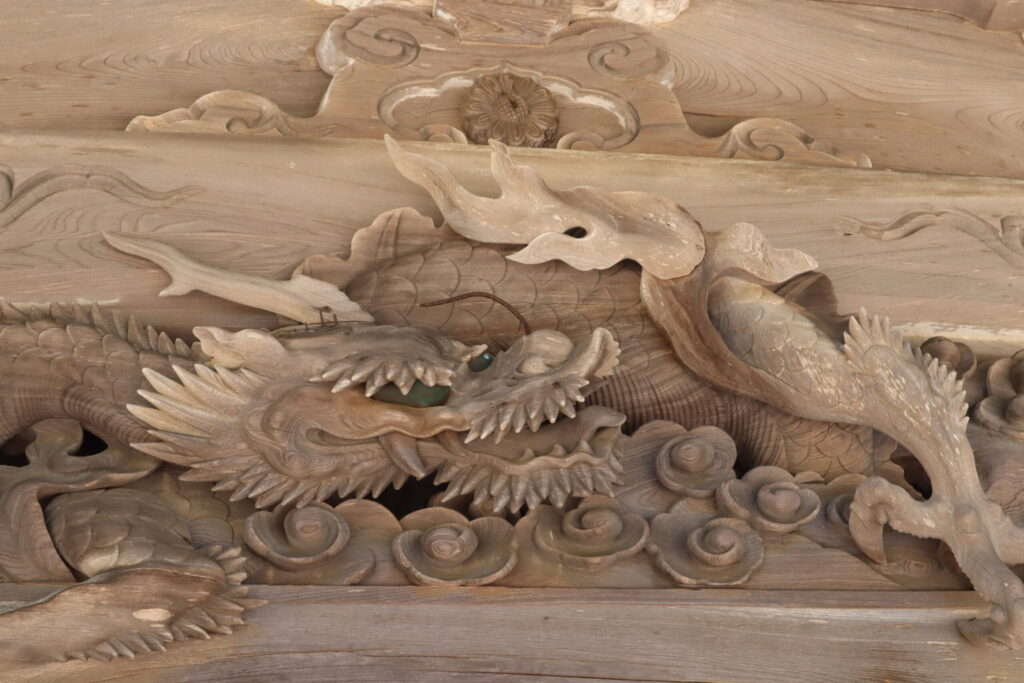
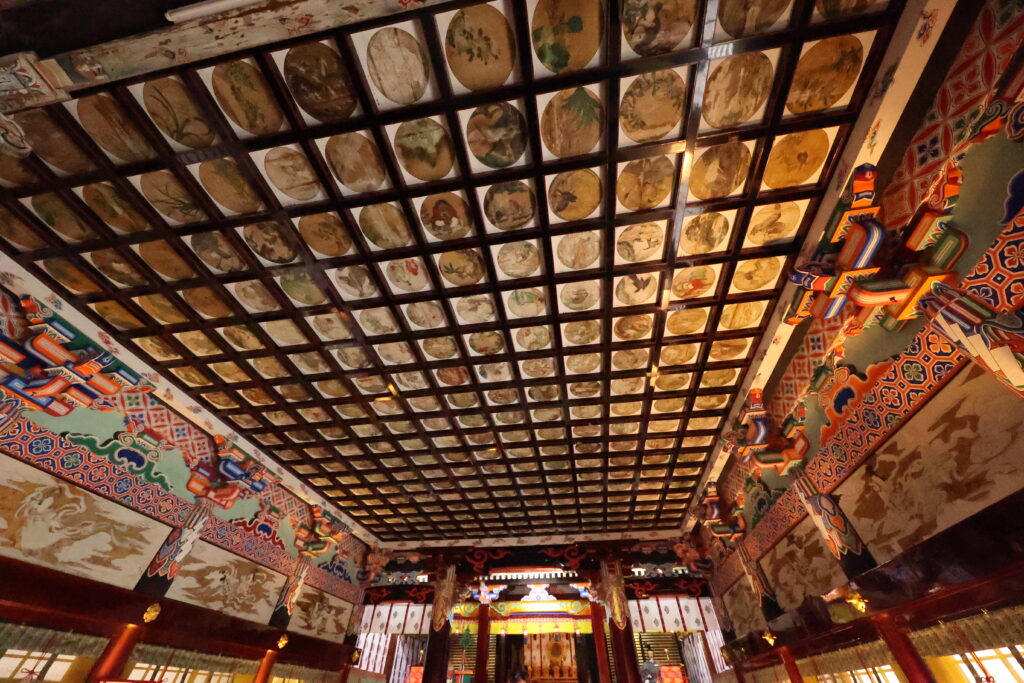
Inside the main sanctuary, the front round pillars and the side half‑round pillars are finished with one of the largest applications of sandalwood lacquer in Japan.
These are surrounded by intricate carvings and murals of celestial maidens.
In addition, the coffered ceiling is adorned with 234 ceiling paintings, adding vibrant color to the interior of the Okumiya.
Alongside motifs of flowers, birds, and the changing seasons, many human figures are also depicted, offering a glimpse into the lives of the people at the time of the shrine’s construction.
All annual rituals and prayer services are conducted at this site.
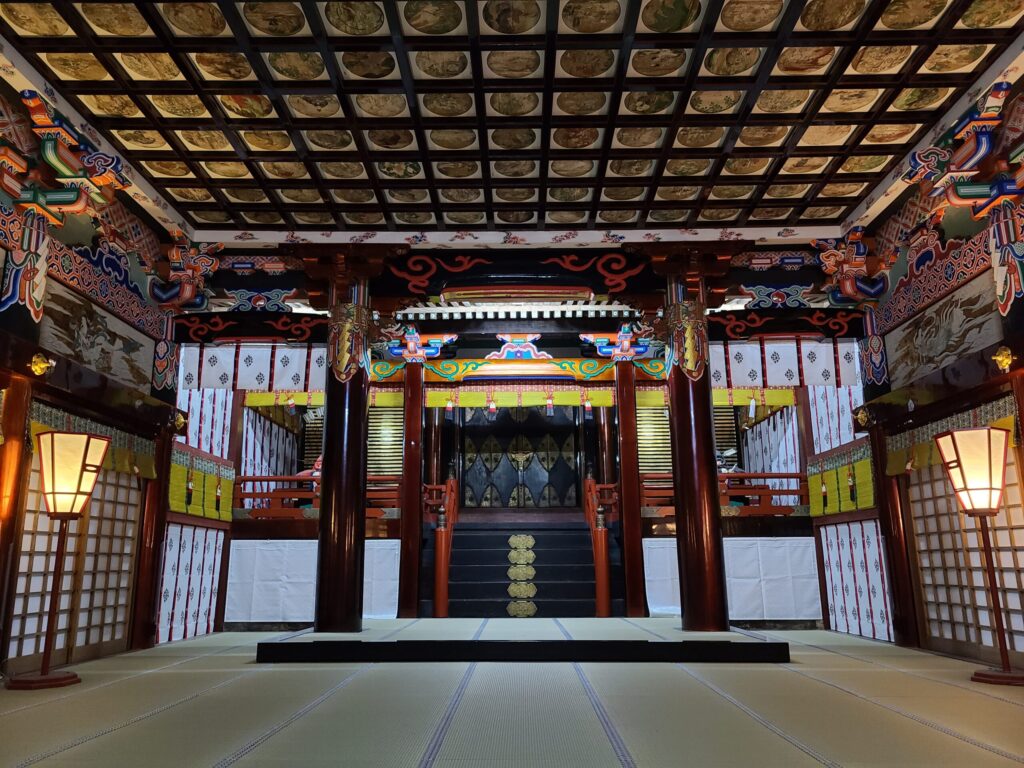
It is a technique in which silver leaf is applied and then coated with transparent lacquer, producing a distinctive copper-like hue through the resulting chemical reaction.
Although this technique is sometimes used for transoms and other decorative elements, an example on this scale is extremely rare.
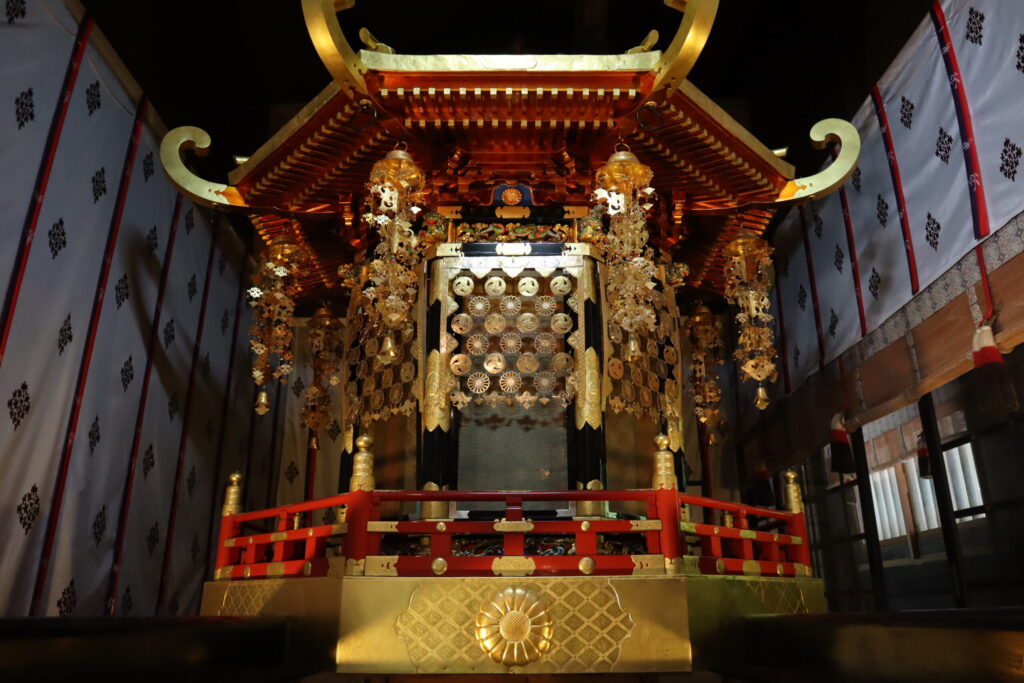
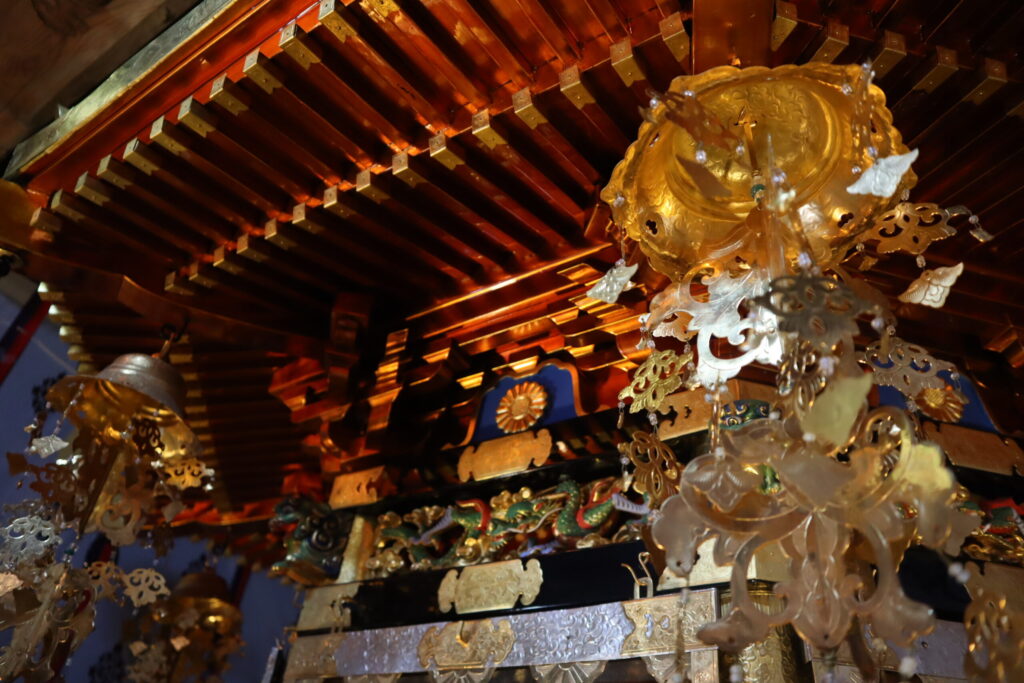
Among octagonal portable shrines, it is said to be the largest in Western Japan.
Since the Heian period, the Daisen Sacred Procession has been held, with seven portable shrines taking part each time.
Among them, this portable shrine is the largest.
It is said to require between forty and fifty bearers.
The sacred procession continued until 1885, but it has not been held since.
In addition to its impressive size, the shrine is richly decorated, and its upper section features the same sandalwood‑lacquer technique used in the Heiden.
Restoration Completed in October 2002
Style: Ryōbu Shintō Style
Height: 3.2 meters
Weight: 1 ton
Carrying Pole: 5.6 meters
Shinmon (Sacred Gate)
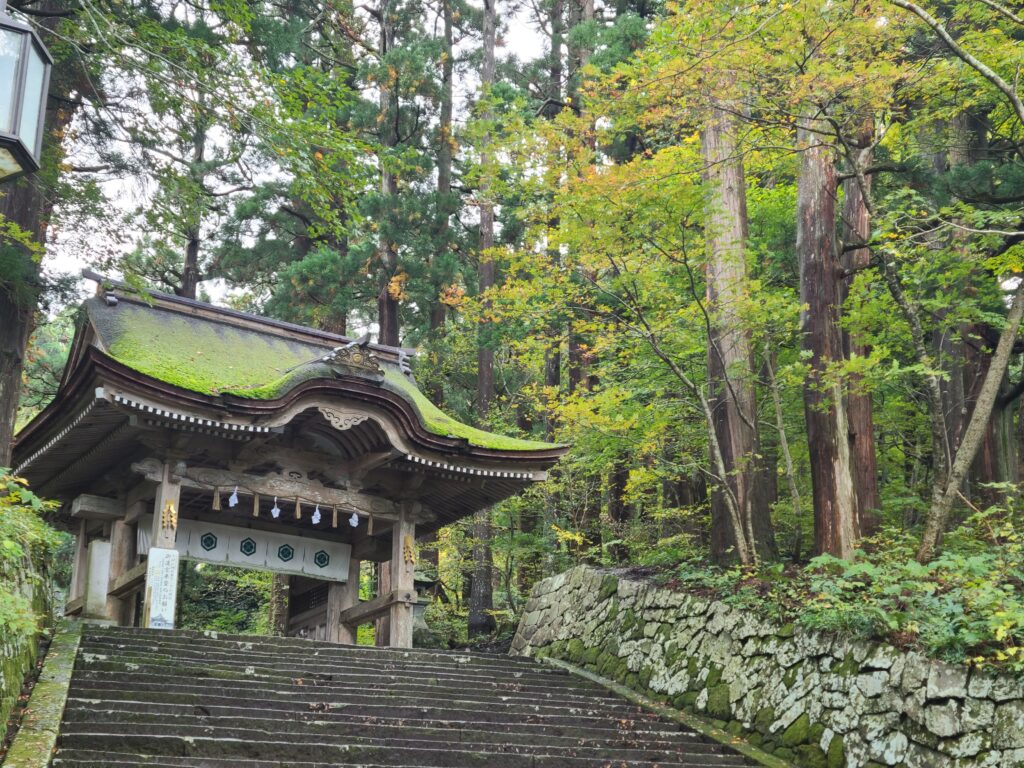
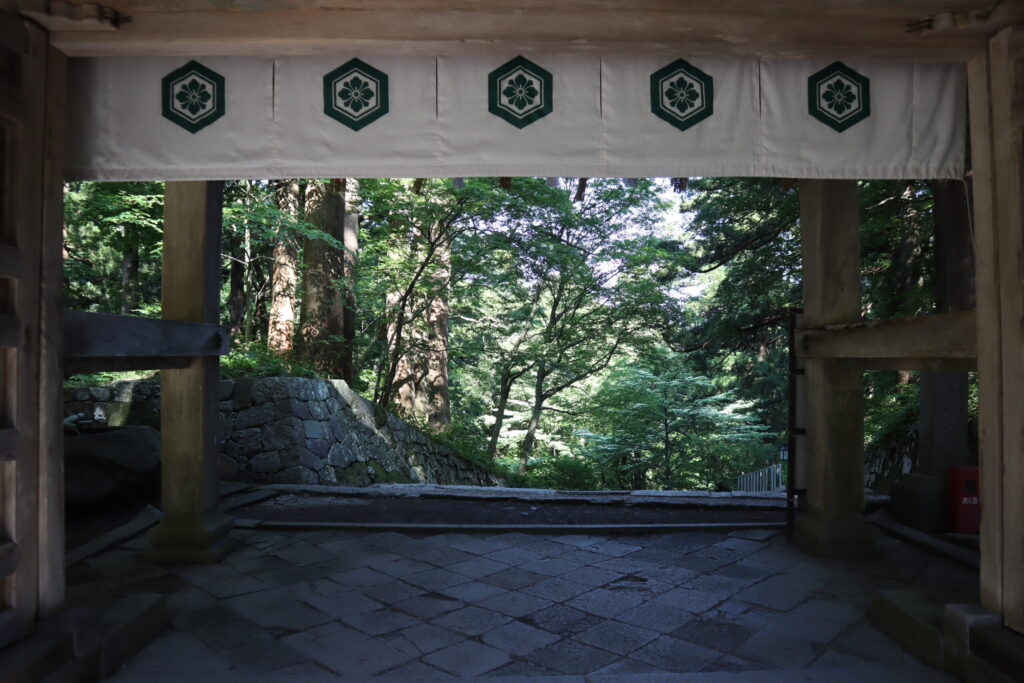
The Shinmon stands at the end of the approach.It is known as the “Ushiro-muki Gate.”It is also called the “Reverse-facing Gate.”
With a locking bar mounted on the outside to prevent the doors from opening,、Originally the front gate of the Saigaku‑in at Daisenji Temple, it was transferred to the shrine and installed here at the Inner Sanctuary without changing its orientation, which is why it now faces the opposite direction.
Sando (Shrine Approach)
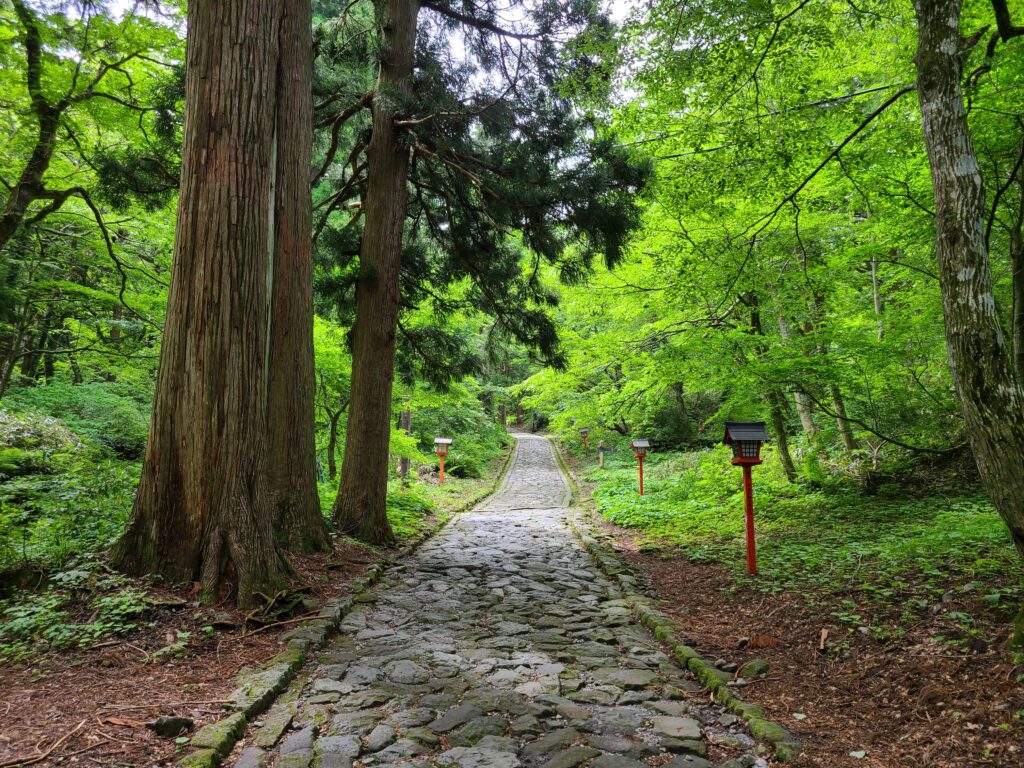
The stone‑paved approach, said to be the longest natural‑stone path in Japan and located on the mountainside of Mt. Daisen amid its native forest,
With each step you take, you will feel both your mind and body grow more purified, and a deepening sense of the sacred as you approach the shrine.
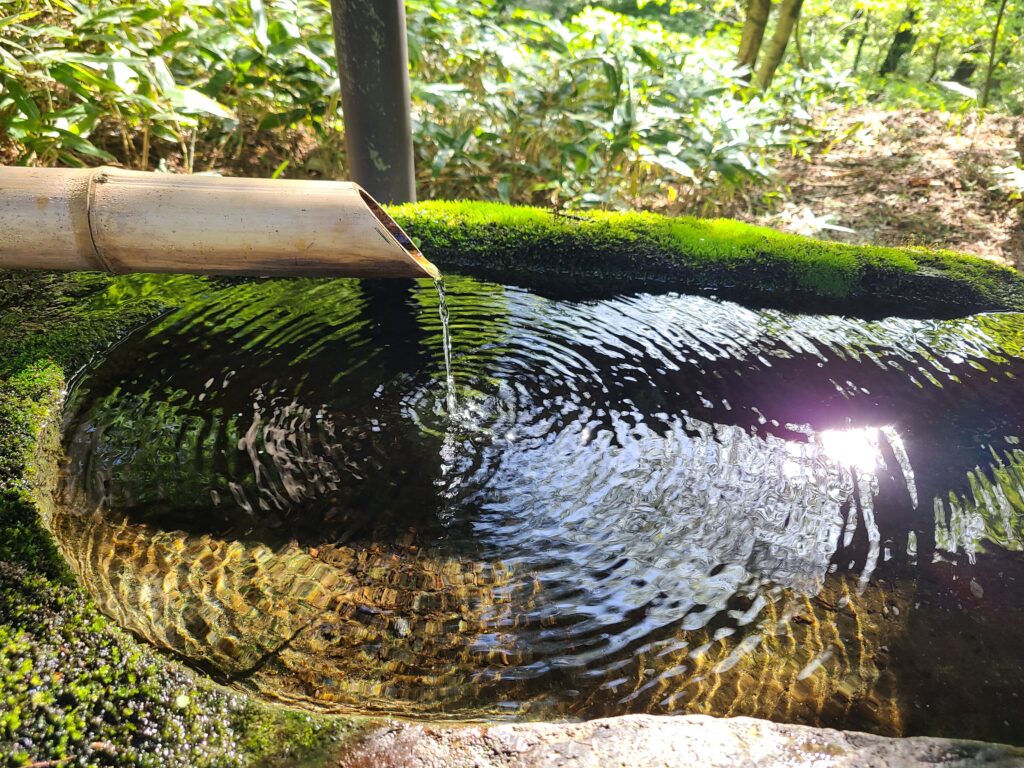
The seasonal flowers and the flowing spring water from Mt. Daisen gently guide visitors toward the Inner Sanctuary.
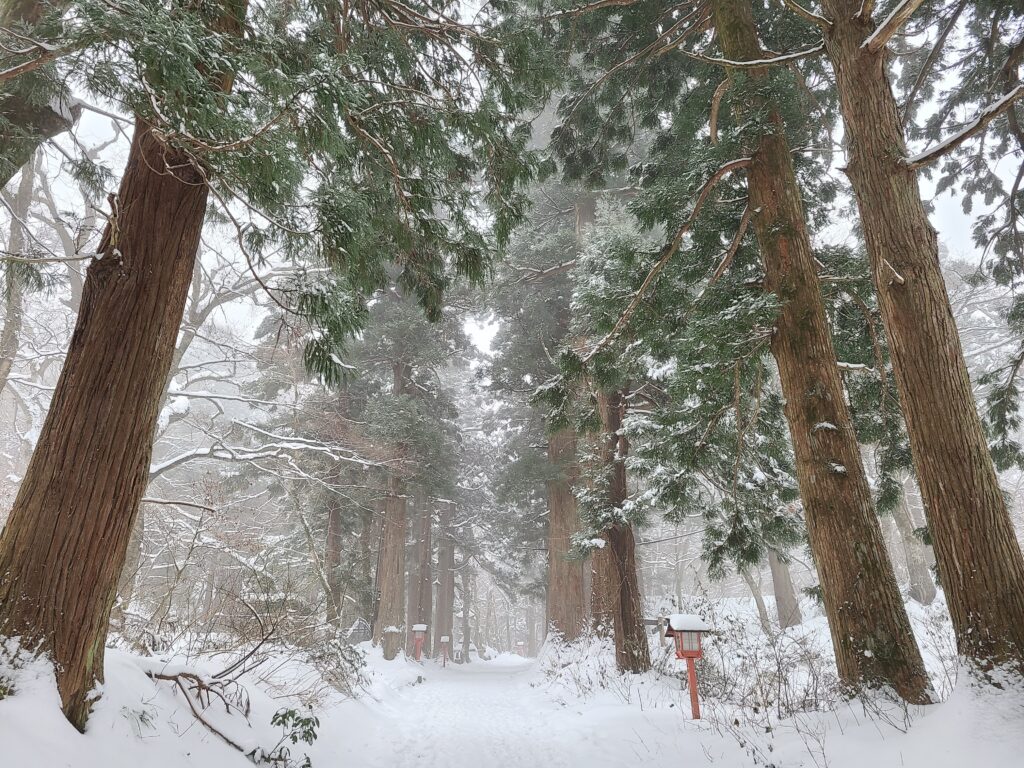
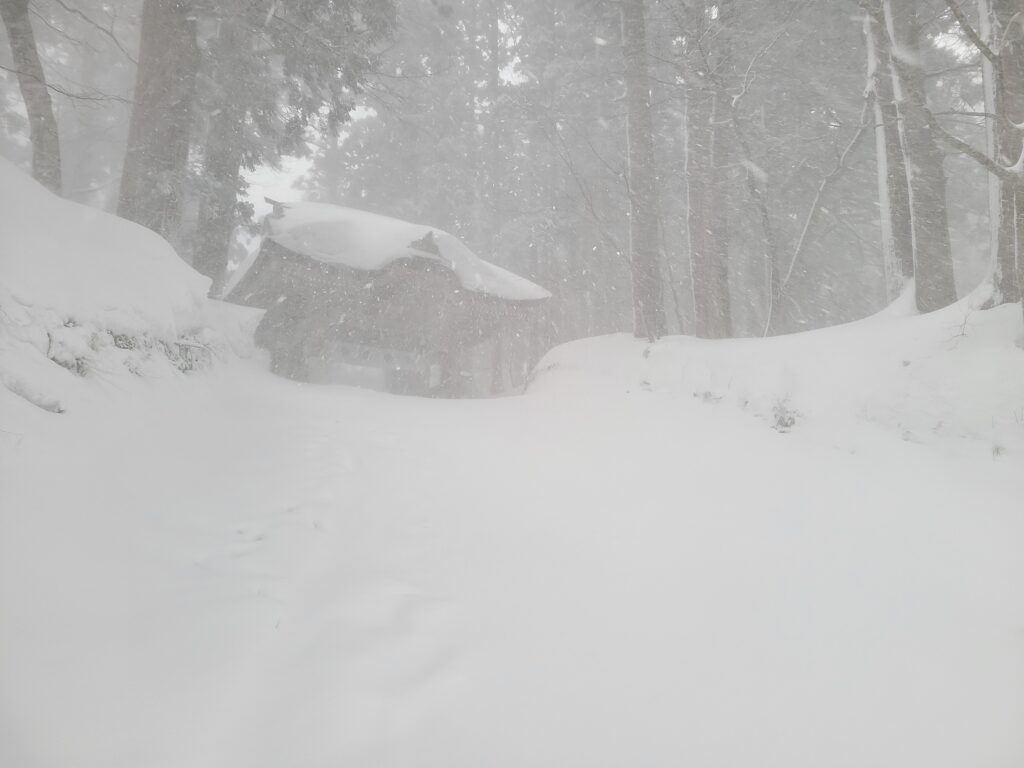
In winter, the approach is covered in snow, forming a pure white path.
The silver‑white landscape offers a quiet world far removed from the noise of the town.
The winter approach, purified and whitened by snow, is breathtakingly beautiful, and its scale is truly awe‑inspiring.
About Worship at the Inner Sanctuary (Heiden)
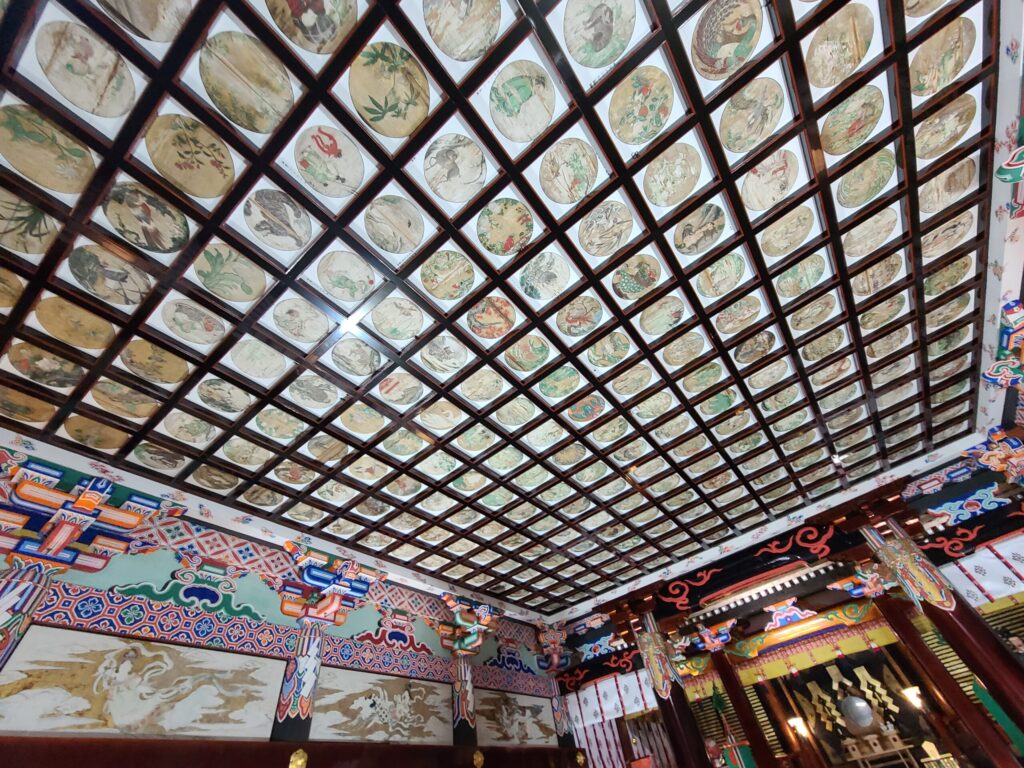
One of the Largest in Japan
Please take a close look at the sandalwood‑lacquered surfaces, the ceiling paintings, and the mural of the celestial maiden.
Offering: 500 yen per person
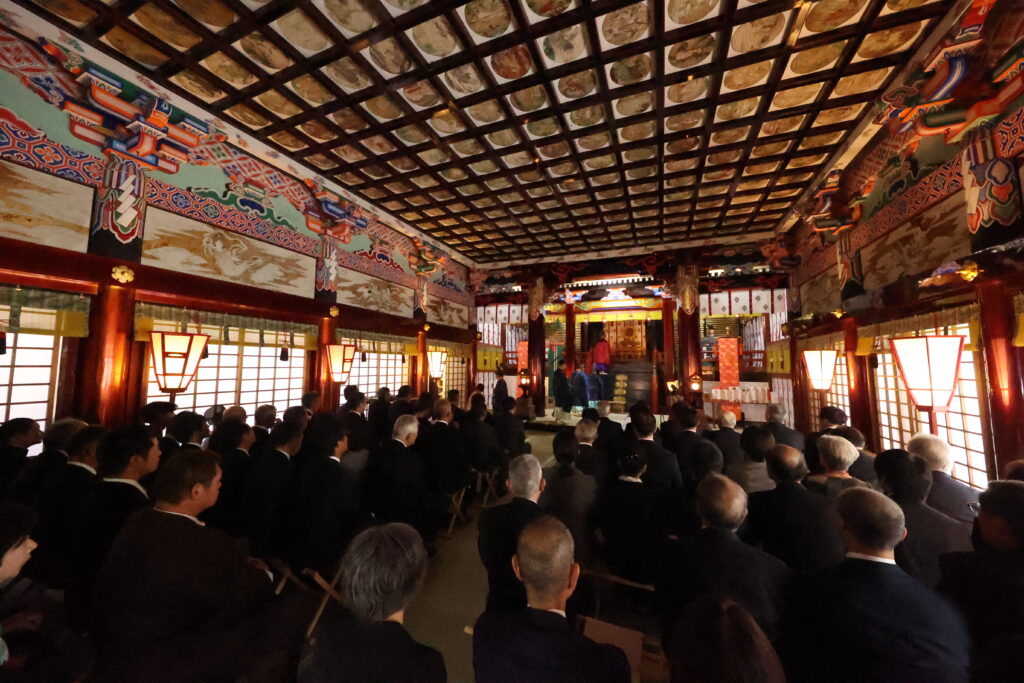
Please note that we may not be able to provide guidance when the Heiden is in use for rituals or prayers.
For further details, please inquire at the Inner Sanctuary Amulet Office.
Massha: Shimoyama Shrine
Another Nationally Designated Important Cultural Property Shrine Building
Enshrined Deity
Shimoyama Daimyōjin (Watanabe Gengorō Terumasa-no-Mikoto)
In 1330 (Gentoku 2), Lord Terumasa, the son of Watanabe Hyūga‑no‑kami, the district governor of Bitchū and a devoted follower of Ōgamiyama Shrine, met with a mysterious misfortune on his return from worship and tragically lost his life.
Moved by compassion, the people built a small shrine for him at Oyama-Shimoyama and called it Shimoyama Shrine. Many miraculous blessings were reported, and later, following a divine message received in a dream, the shrine was relocated to its present site. It gained the devotion of numerous military leaders, and the current shrine building was rebuilt in 1805 (Bunka 2) by Lord Kamei Okino‑kami Norikata of Tsuwano in Sekishū, whose family had long been devoted worshippers. The structure features a complex roof design, a coffered ceiling in the Heiden adorned with paintings of flowers, birds, and seasonal scenes, and finely detailed carvings throughout its exterior.
It was designated, together with the Inner Sanctuary of Ōgamiyama Shrine, as a National Important Cultural Property.
Victory in Fortune, Protection from Misfortune, and Healing from Illness
Access
Ogamiyama Shrine – Okumiya (Inner Sanctuary)
689-3318
Daisen, Daisen Town, Saihaku District, Tottori Prefecture
Telephone / Fax0859-52-2507
Reception: 9:00 a.m. – 4:00 p.m.
*Times may vary depending on weather conditions.
by car
Yonago Expressway
Yonago IC / Daisen PA (Smart IC) / Kishimoto IC
Continue toward the Daisen area.
About a 15-minute walk along the approach from the Daisenji lodging district.
A 20–30 minute walk from the public parking area.
by train
About 40 minutes by car from JR Yonago Station
About 30 minutes by car from JR Hōki-Daisen Station
by bus
Take the bus bound for Daisenji via the scenic road and get off at the “Daisenji” stop.
Parking
Parking for Visitors to the Daisen-ji Oku-no-miya Shrine Only
Located along the Daisenji approach.
Navigation (Car Navigation System)
Search for “16-1 Daisen, Daisen Town, Saihaku District, Tottori Prefecture.”
In case the parking lot is full
Daisen Bakuroza Parking Lot
Search for “40 Daisen, Daisen Town, Saihaku District, Tottori Prefecture.”